🟠 Interactive Arduino LED Memory Game
Embedded System | Arduino Mega | Hardware + Game Logic
This project is an interactive hardware-based game system built using Arduino Mega, combining physical components with structured game logic.
The system challenges players to follow and reproduce LED-based sequences using arcade buttons, testing memory, timing, and reaction speed.
LED buttons light up in specific patterns, and the player must press the correct sequence within a limited time. Sound feedback is used to guide the player and indicate success or mistakes.
The game includes scoring, mistake tracking, and increasing difficulty levels, making the experience progressively more challenging.
This project demonstrates embedded programming, real-time interaction, and the integration of hardware input/output systems using Arduino.
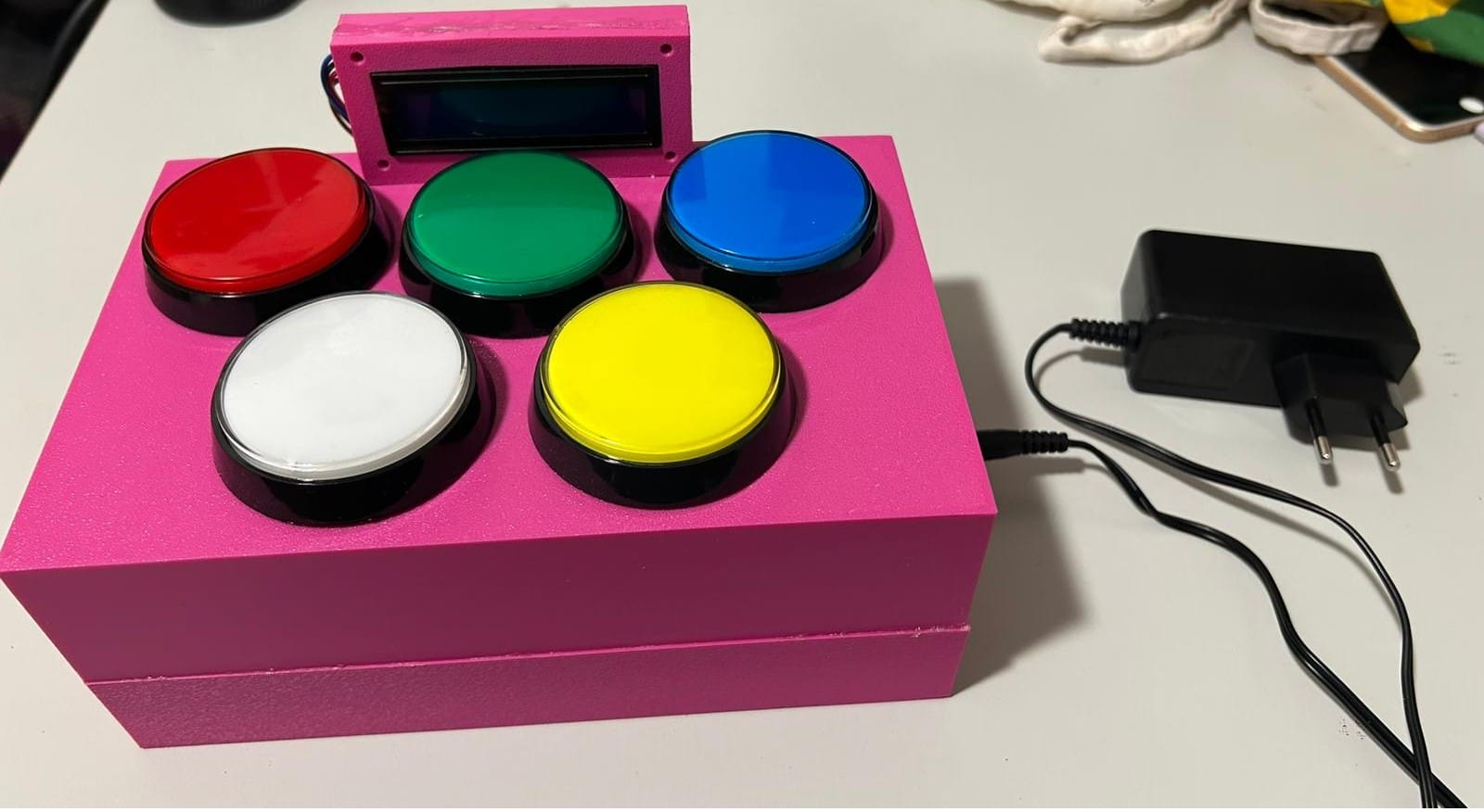
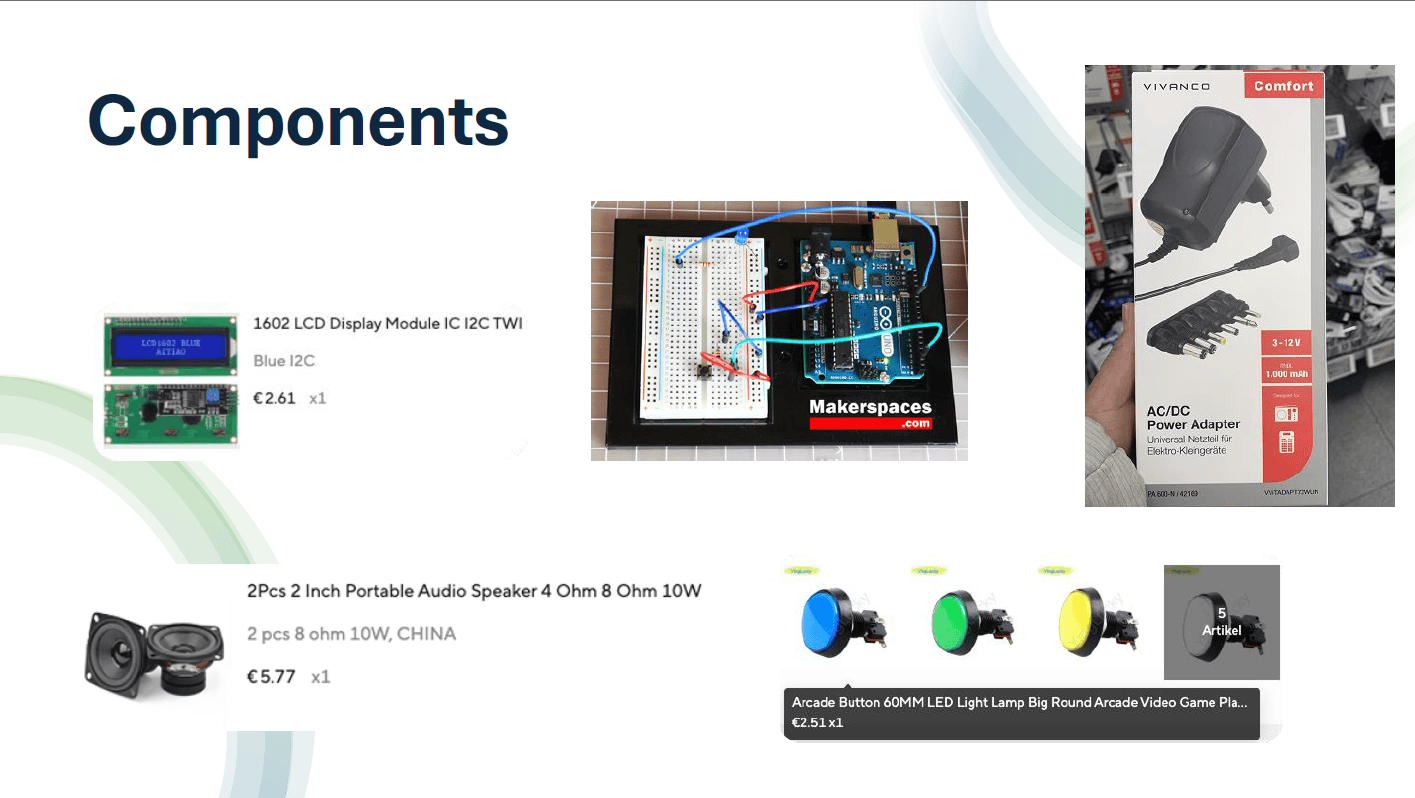
Overview of hardware components used in the system
System Components
The system is built using Arduino Mega alongside a combination of input, output, and power components.
Key components include LED arcade buttons for user interaction, a speaker for audio feedback, and an LCD display for visual output and system information.
The circuit is powered using an external power adapter and connected through a breadboard setup, allowing flexible wiring and modular design.
These components work together to create a fully interactive embedded system combining real-time input, feedback, and control.
Gameplay & Interaction
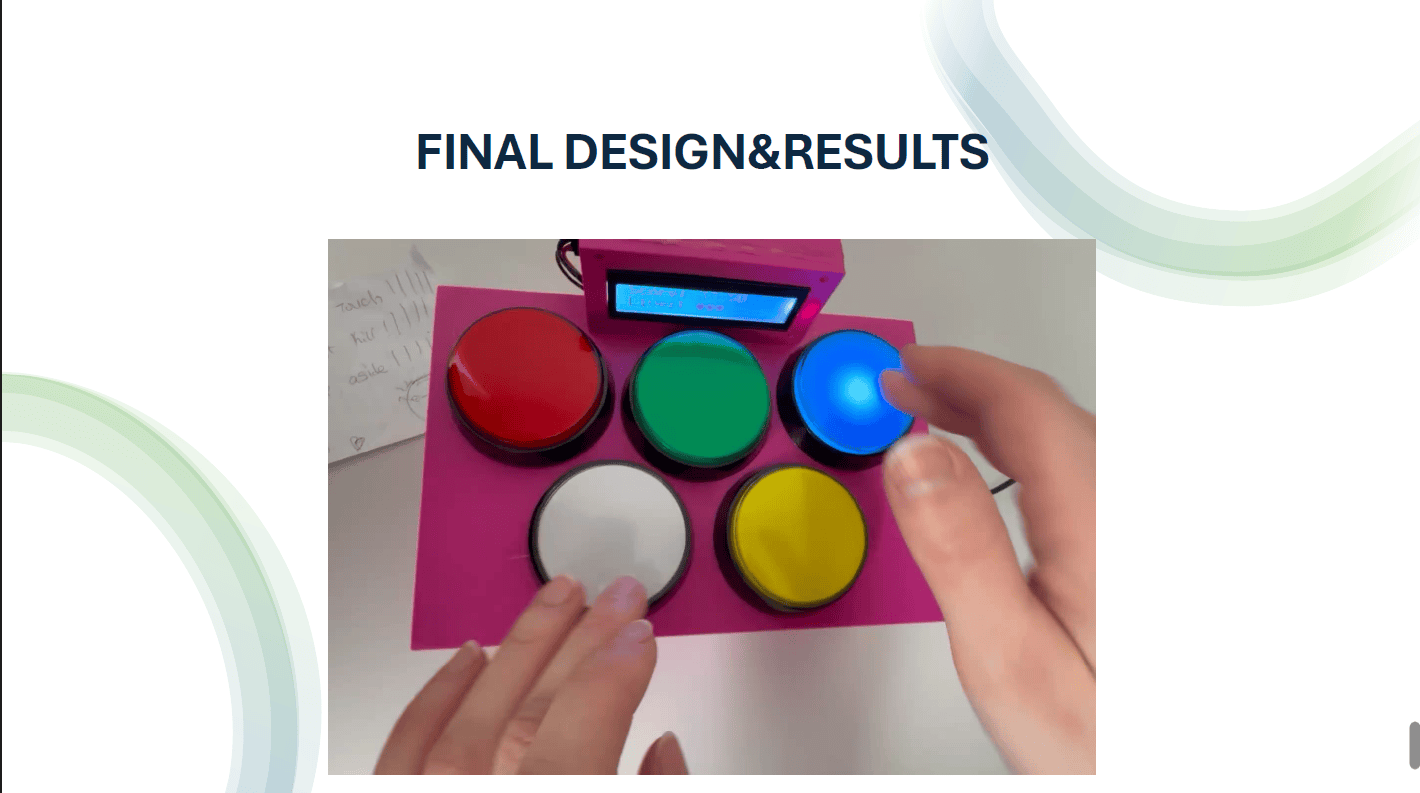
The game presents a sequence of lights that the player must memorize and repeat correctly using the buttons.
Each correct round increases the difficulty, while mistakes are tracked to determine game over conditions.
Audio feedback enhances the experience by signaling correct inputs, errors, and game progression.
Learning & Implementation
While building this project, I gained a better understanding of how hardware and code actually work together in real time. It wasn’t just about writing logic, but making sure every component responded correctly based on how it was wired.
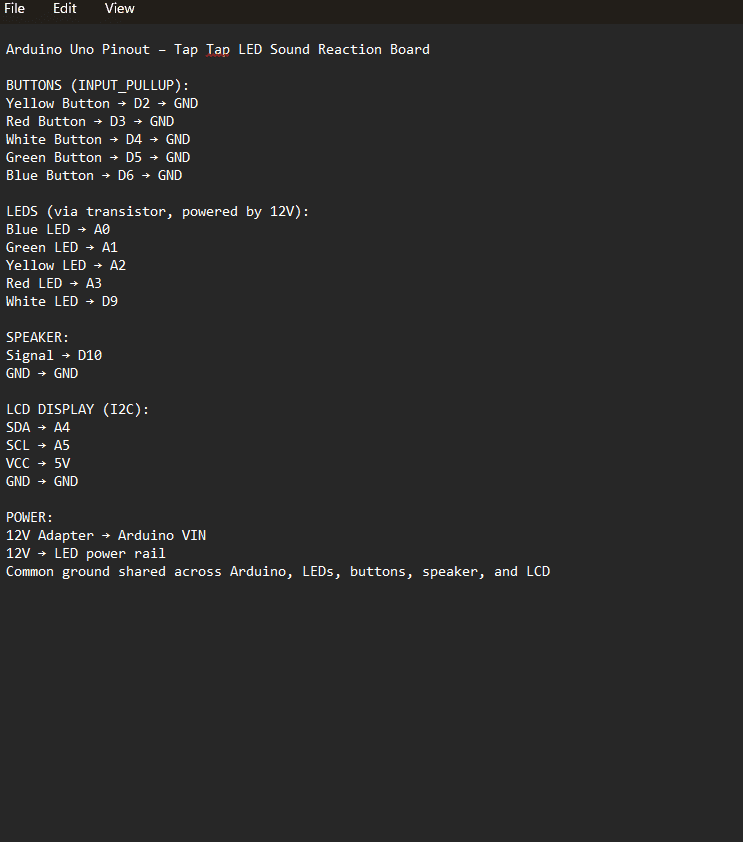
One of the key parts was connecting the components to the correct Arduino pins and making sure each button, LED, and sound output was mapped properly. Small mistakes in wiring or pin assignment could completely affect how the system behaved.
I also learned how to manage timing and interactions between inputs and outputs, especially when handling sequences, delays, and user responses during gameplay.
Overall, this project helped me understand the practical side of embedded systems, from wiring and pin setup to making everything work together as one complete system.